Automated and enhanced background checks for security and emergency
Organisations within security and emergency sector manage access to sensitive areas and information, placing high demands on control and documentation. With requirements from security legislation, the CER Directive, and ISO 27001, there is an increasing need for systematic and audit-ready background checks of employees and partners. P-Secure digitises the entire process — from hiring to continuous re-checks — with full traceability and compliance with GDPR.
Our platform is used by







Compliance challenges in the security and emergency sector
Organisations within the security and emergency sector operate in a dual compliance role: they are subject to their own requirements for employee screening and approval — including police approval in accordance with the Danish Security Services Act — while also being responsible for meeting customer requirements related to access control and supplier oversight.
In practice, this means that organisations must be able to document that all individuals with access to critical functions — including employees, contractors, and partners — have been screened on a consistent and verifiable basis. Documentation must be up to date, consistent, and at all times available as accurate, traceable, and audit-ready.
The sector is characterised by:
- Employees with access to critical functions and sensitive areas
- Requirements for regulatory approval (e.g. police approval)
- Deliveries to customers within critical infrastructure
- Requirements for documentation across the organisation and supply chain
This increases complexity and places high demands on consistent processes, creating a risk of limited oversight, manual errors, and time-consuming administration in relation to background checks, re-checks, and documentation.
Key features for the security and emergency sector
P-Secure automates and standardises core elements of the background screening process and adapts it to the needs of the sector. Automation ensures that background checks are carried out accurately and on time, reduces the risk of human error, and significantly eases administrative workload.
The solution supports, among other things:
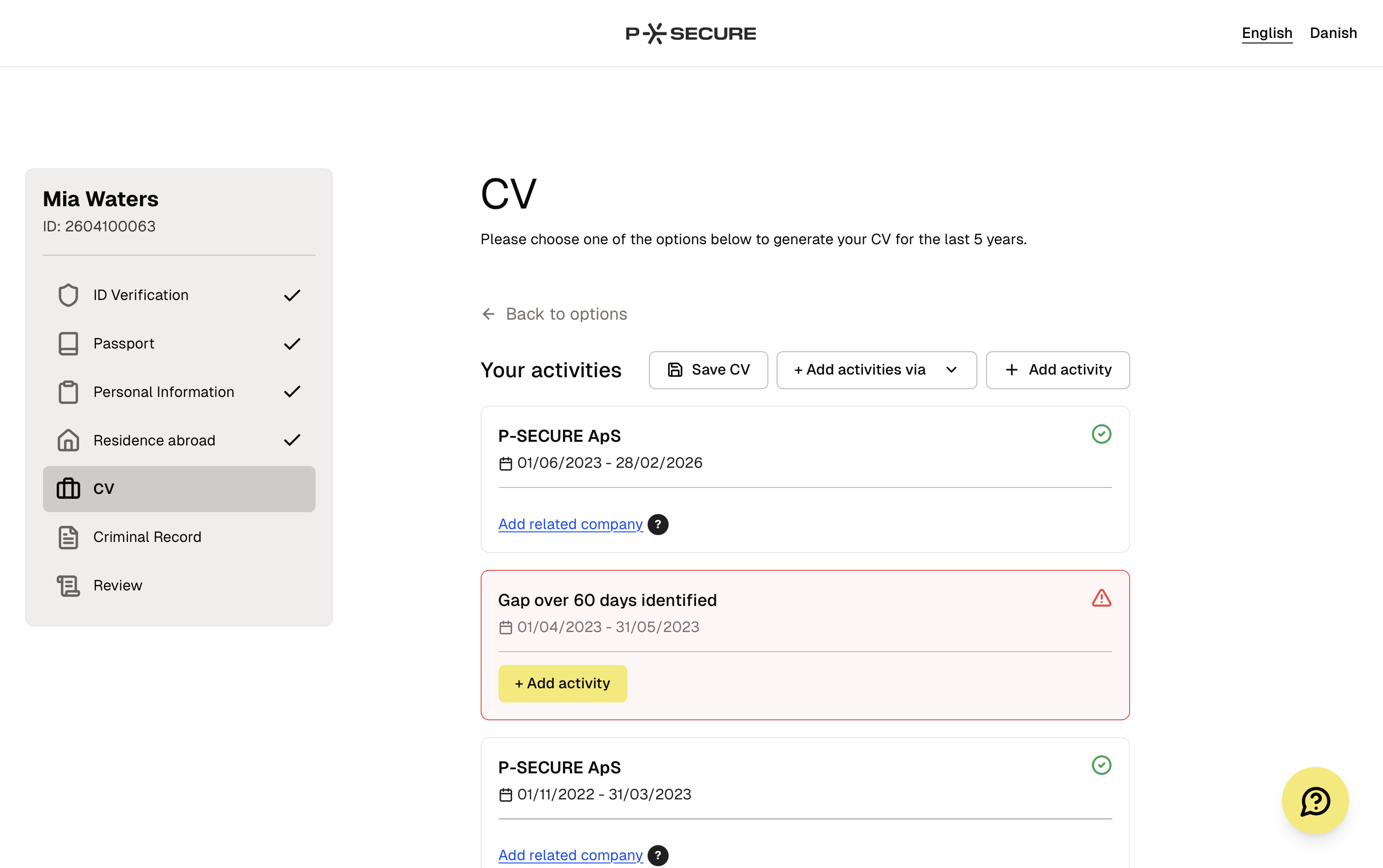
ID and CV check
Automate ID verification and CV checks including documentation of employment gaps
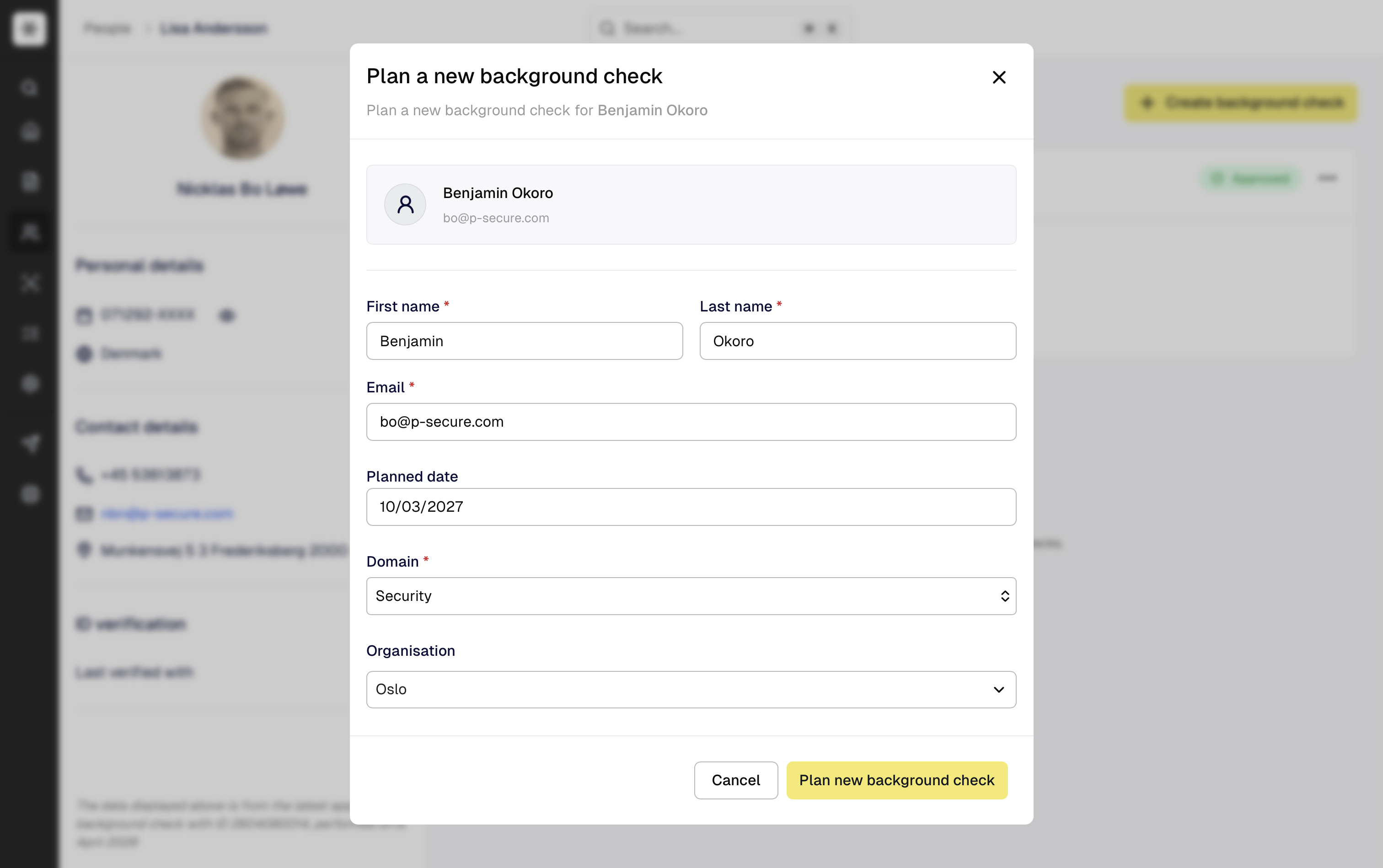
Re-check
Easily schedule and complete periodic re-checks of employees in line with regulatory and contractual requirements
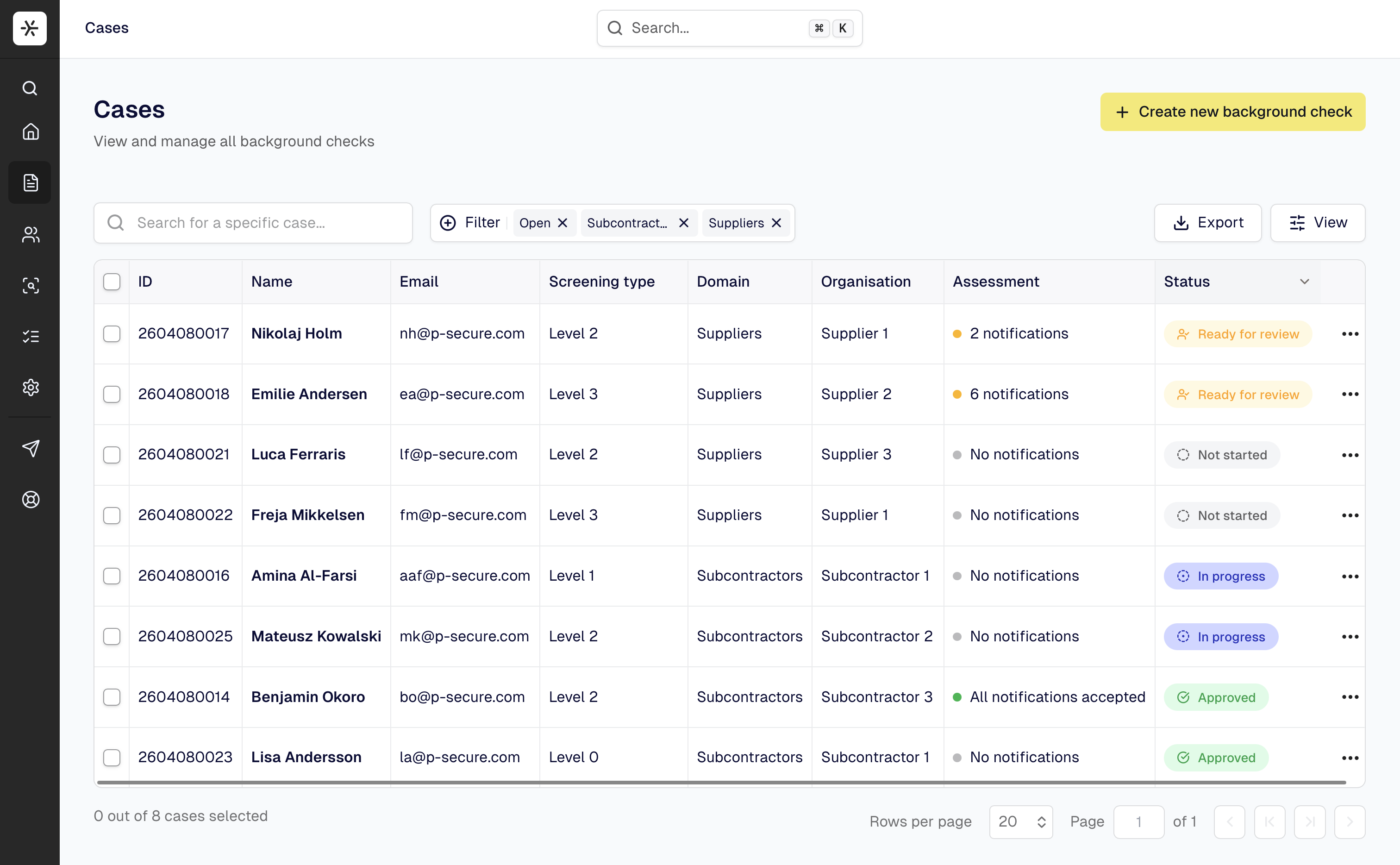
Audit
Share specific cases for digital audit with the police, authorities, or internal auditors
Pre-approval screening
Conduct structured background checks ahead of the police approval process under the Danish Act on Private Security Services — documenting that you know your employees before formal approval is in place
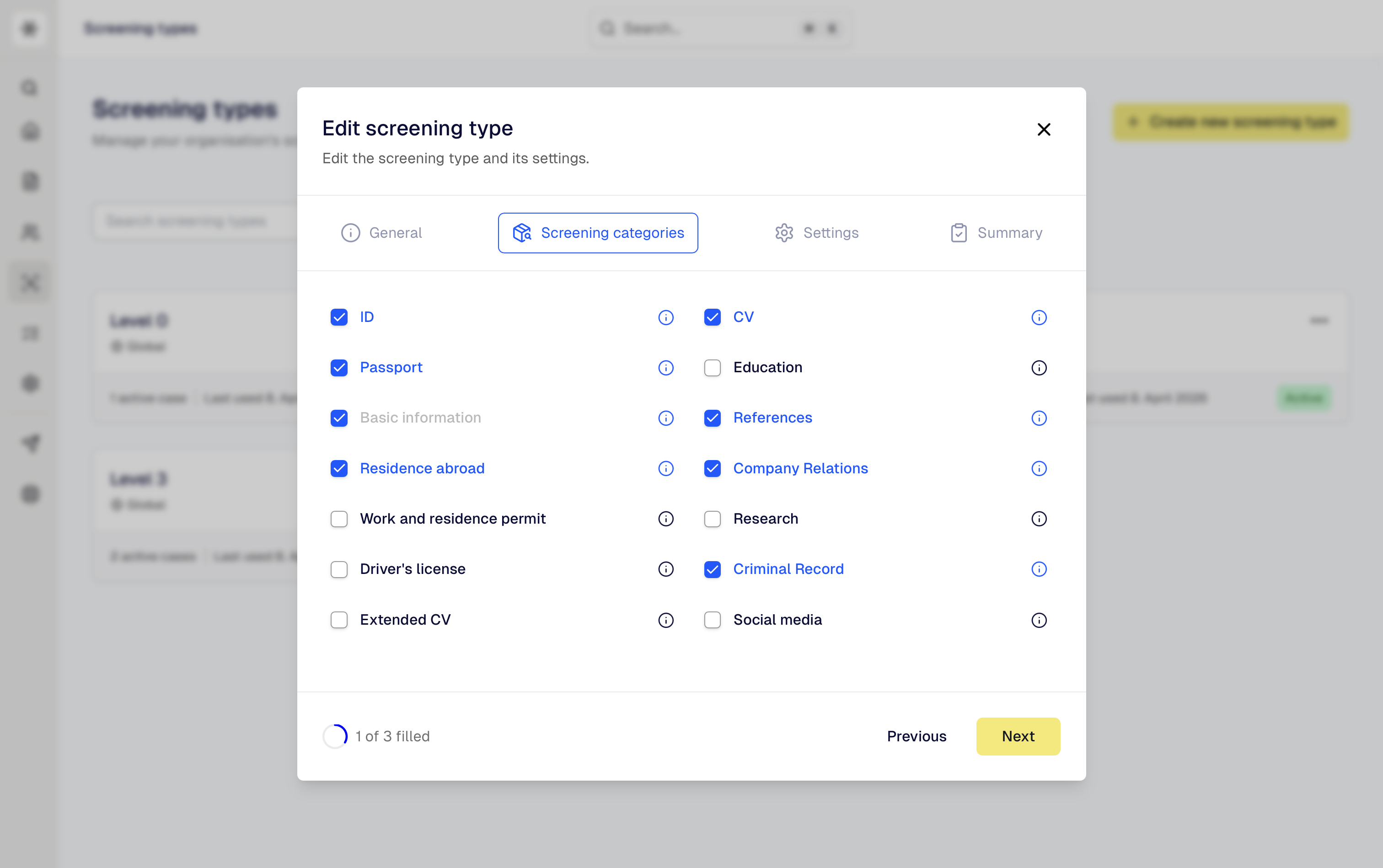
Recommended screening categories for background checks
In collaboration with stakeholders in the security and emergency, P-Secure is working to establish a common standard for screening and background checks that can be applied across security and emergency preparedness. Download our recommended screening categories for the sector of security and emergency.
Regulatory frameworks and P-Secure’s recommendations
Requirements
An individual may only work as a security guard if approved by the police in accordance with the Danish Security Services Act. Approval requires, among other things, a clean criminal record and an overall assessment of conduct.
On this basis, P-Secure recommends a systematic approach to background screening that supports both regulatory requirements and the need for consistent documentation across the organisation.
Regulatory, customer, and market requirements
In addition to regulatory requirements, organisations are increasingly facing demands from customers — particularly within critical infrastructure — for documented control of personnel and suppliers. The CER Directive requires control of individuals with access to critical functions, which in practice entails documented screening of employees and relevant partners.
At the same time, certifications such as ISO/IEC 27001 serve as proof of a systematic approach to personnel security and are often a requirement or a key competitive factor in tenders and service delivery.
P-Secure’s recommendations
P-Secure recommends conducting background screening prior to obtaining a security guard licence. The screening categories are based on sector experience and include the following:
As a minimum, the following elements are recommended:
- ID verification
- CV checks — at least 5 years, including documentation of gaps
- Criminal record checks
- Work and residence permits
This provides a comprehensive, risk-based decision-making foundation that can be adapted to permanent employees, new hires, contractors, and partners. P-Secure supports documentation and compliance across the organisation and ensures a consistent, audit-ready foundation for personnel screening.
The need for modern background screening
Implement automated and compliant background checks
Increasing requirements for control, documentation, and access management mean that background checks can no longer be handled as one-off or manual processes. Controls must be carried out consistently, efficiently, and in a fully documented manner — across employees, contractors, and partners.
Requirements related to police approval, supplier control, and documentation for customers and certification bodies also require background checks to be integrated into daily workflows — not handled as isolated or ad hoc activities.
This underscores the need for automated and system-supported processes that can:
- Ensure consistent and documentable controls
- Reduce manual processes and dependency on individuals
- Support efficient handling of hiring and access changes
- Provide an audit-ready foundation for authorities, customers, and certification bodies
- Manage ongoing re-checks and changes in access levels
Ensure ongoing compliance
More than a background check
P-Secure is not just a tool for one-off background checks, but a platform for continuous compliance:
- Supports compliance with requirements for police approval and the Danish Security Services Act
- Supports compliance with ISO/IEC 27001 and the CER Directive
- Centralises all documentation in one place — audit- and inspection-ready
- Enables ongoing re-checks and management of access levels
- Ensures consistent controls across the organisation and supply chain
- Supports compliance with the GDPR

Secure your workspace today



SKI 02.14 It-konsulenter (Dynamisk Indkøbssystem)