
Automated and enhanced background screening for research institutions
Research institutions are central to innovation and manage valuable knowledge and sensitive data, while also being attractive targets for espionage and unauthorised knowledge transfer. The open and international nature of research environments increases the risk of misuse of legitimate access. With stricter requirements driven by URIS guidelines, threat assessments from PET, and the CER legislation, there is increasing focus on personnel security and documented background checks. P-Secure digitises the entire process — from onboarding to continuous re-checks — with full traceability, audit-ready documentation, and compliance with GDPR.
Compliance challenges in research institutions
Research institutions must ensure that employees, visiting researchers, consultants, and others continuously meet security requirements set by authorities, research funding bodies, and industry partners. Documentation must be consistent, up to date, and at all times demonstrable as accurate, traceable, and audit‑ready.
In practice, this is complex and resource‑intensive, as research institutions are characterized by high international mobility, temporary affiliations and visiting researchers, collaboration across countries, institutions, and companies, and access to knowledge and data with strategic and commercial value.
Manual processes may lead to:
- Delays in onboarding and reduced project agility
- Insufficient ongoing overview or inconsistent documentation
- Increased risk of non‑compliance and exposure to foreign intelligence and espionage threats
- Time‑consuming case handling and audit processes
At the same time, expectations from government, industry, and research funding organizations continue to increase, requiring continuous control, traceability, and documentation.
Relevant features for research Institutions
P‑Secure automates and standardizes key elements of the background screening process and adapts to the needs of research institutions. Automation ensures timely and consistent execution of controls, reduces the risk of human error, and significantly lowers the administrative burden.
The solution supports, among other things:
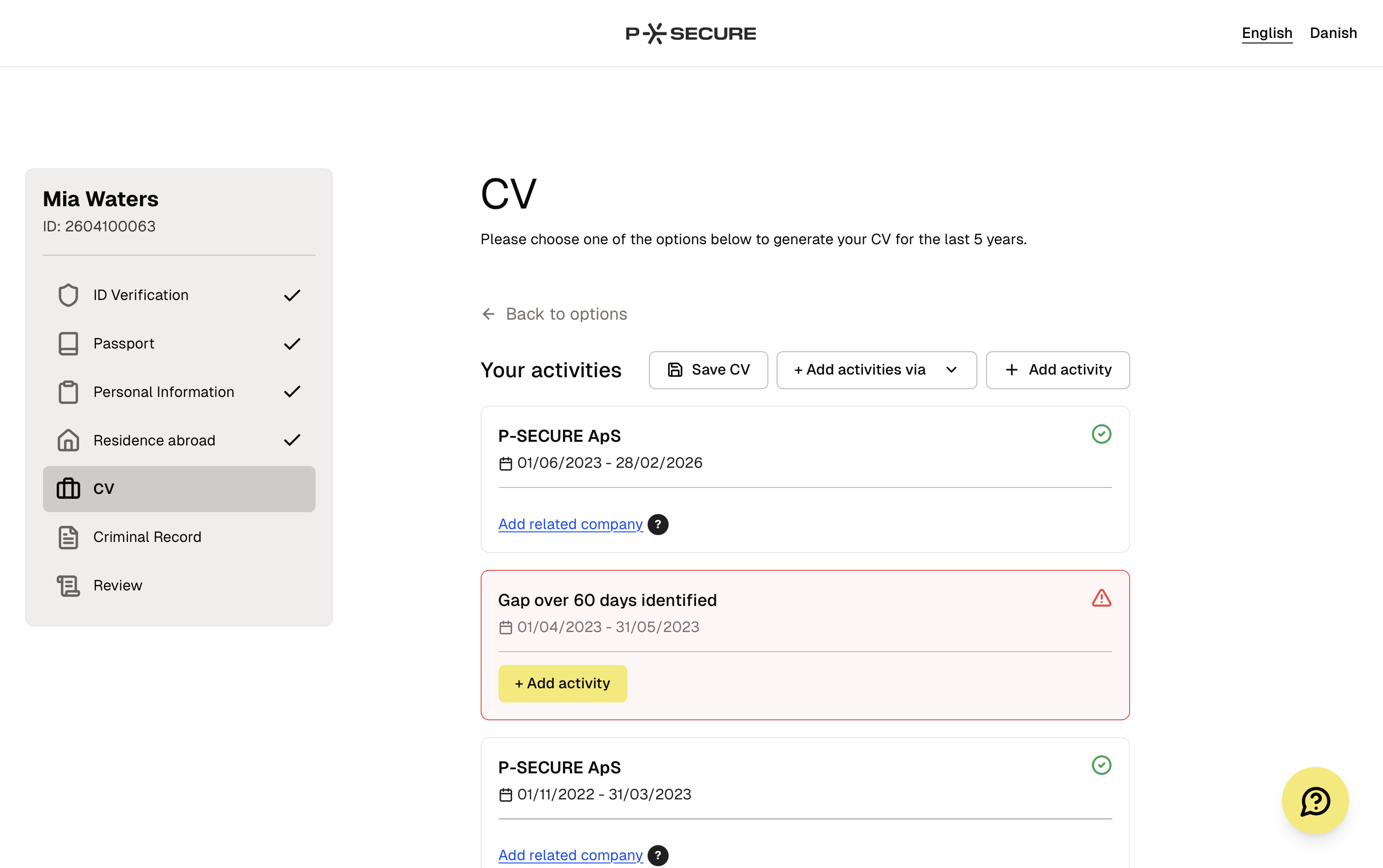
ID and CV check
Verification of identity and CV, including documentation of employment and research gaps
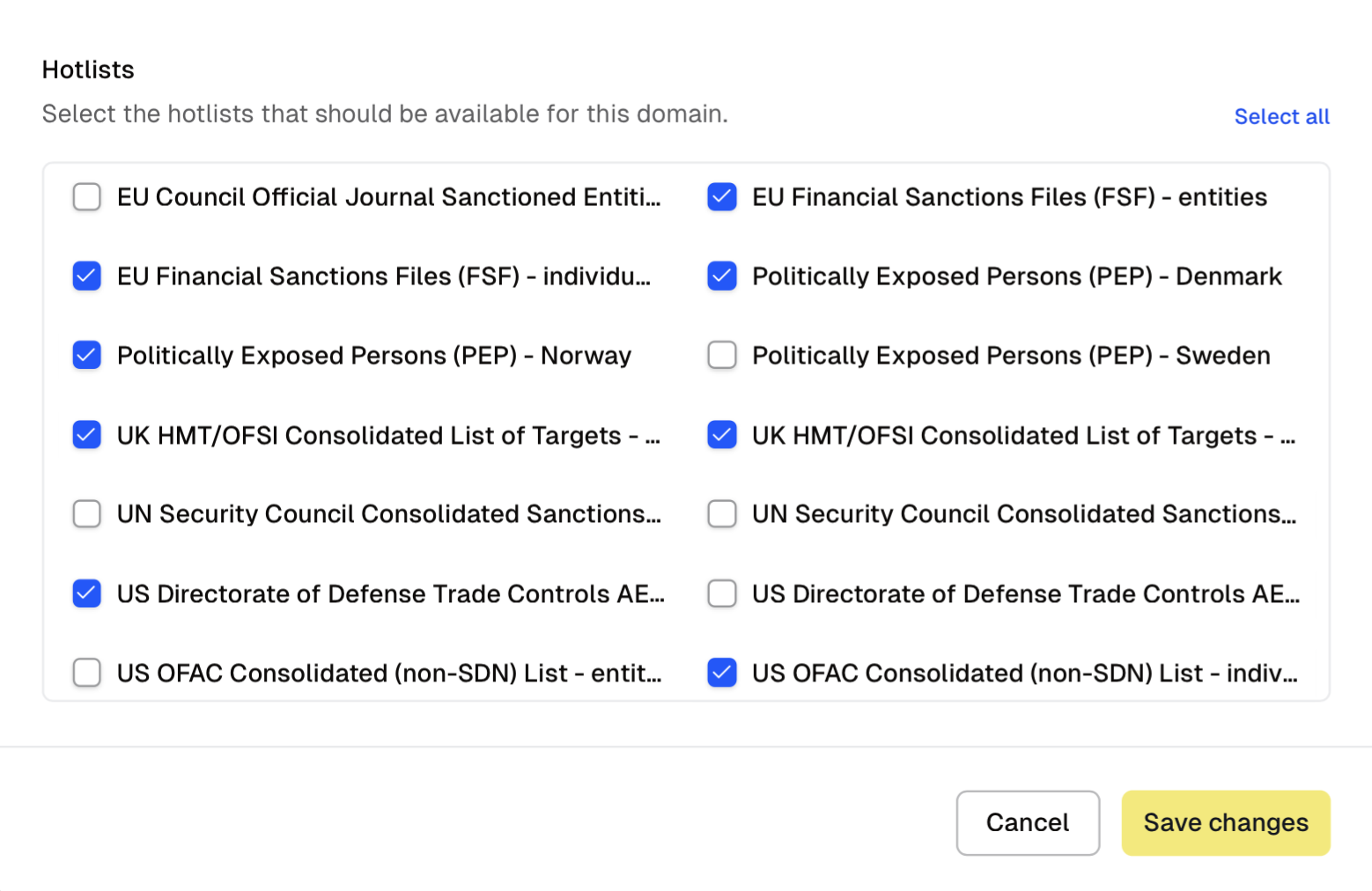
Watchlist and sanctions screening
Watchlist and sanctions screening of employees, collaborators, and institutions
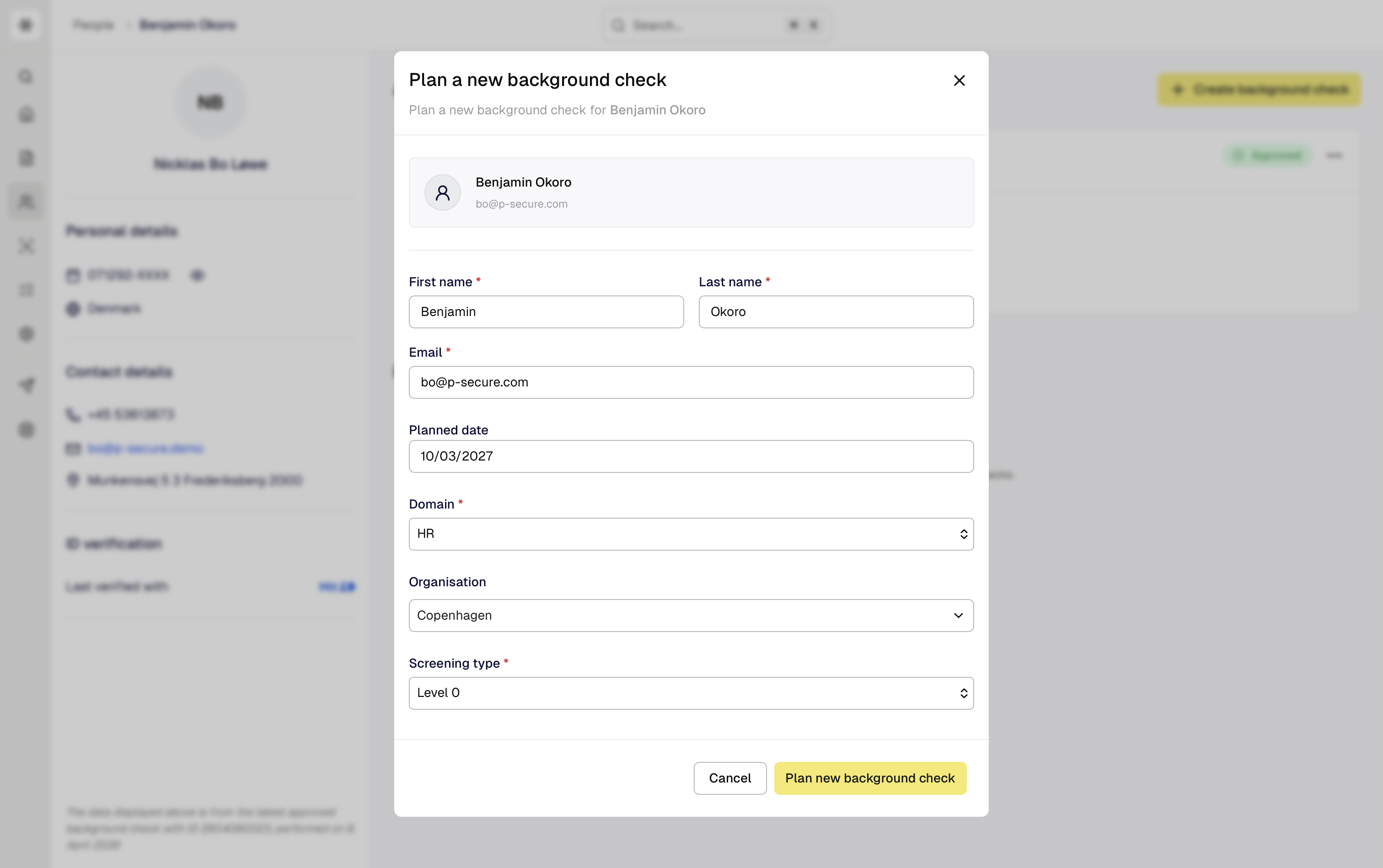
Re-check
Ongoing re‑checks of individuals in sensitive research roles
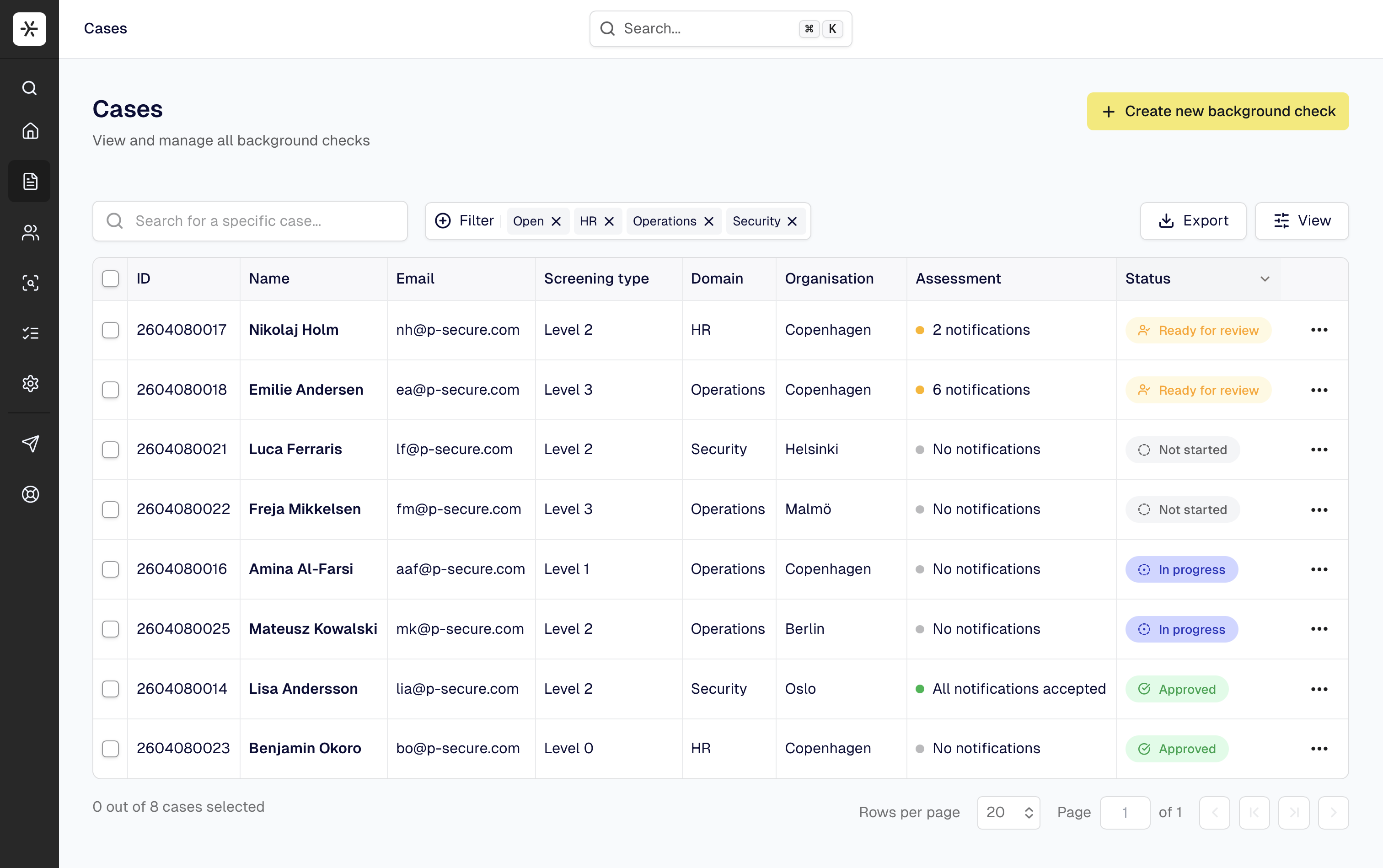
Criminal record check
Upload and authenticity check of criminal records
Recommended screening categories for background checks
In collaboration with stakeholders in the research sector, P-Secure is working to establish a common standard for screening and background checks that can be applied across transport and logistic companies. Download our recommended screening categories for the transport and logistics sector.
Regulatory requirements and P‑Secure’s recommendations
Research institutions are not governed by a single comprehensive law on personnel or information security but are subject to a range of overlapping requirements and expectations.
The URIS Guidelines
URIS requires that research institutions:
- Identify and protect critical research
- Know their collaborators and their backgrounds
- Protect employees, students, and the institution against foreign influence
Background screening is a core element of the “know‑your‑partner” and “know‑your‑research” approach.
The CER Directive and the Act on the Resilience of Critical Entities
Certain research activities and infrastructures are - or may become - classified as critical entities. In such cases, background checks are required for personnel, consultants, and suppliers with access to critical functions.
The CER Directive requires, at a minimum:
- Identity verification
- Criminal record checks
Based on these requirements, PET’s guidance on secure research, and experience from other sectors, P‑Secure recommends establishing a risk‑based and systematic approach to background screening and re‑screening. PET emphasizes that employees are crucial to protecting knowledge and that background checks should be conducted before, during, and after employment or collaboration.
The need for modern background screening
Implement automated and compliant background checks
Stricter security requirements and increasing expectations from funding bodies and partners mean that background checks can no longer be managed effectively through manual processes alone.
Benefits of automated background screening include:
- Reduced administrative burden
- Shorter onboarding times
- Increased transparency and consistency
- Stronger audit capabilities, internal controls, and preparedness
- Support for continuous compliance
- Coverage of permanent staff, visiting researchers, and external partners
Continuous compliance
More than a background check
P‑Secure is not merely a tool for one‑off background checks but a platform for continuous compliance:
- Supports compliance with the URIS guidelines, the CER Directive, and expectations from funding bodies
- Centralizes all documentation—ready for audits and supervision
- Enables risk‑based re‑screening and continuous monitoring
- Ensures secure and GDPR‑compliant data processing
Research institutions must balance academic openness with security and responsibility. P‑Secure enables a robust, documentable, and future‑proof security infrastructure for Danish research.










Secure your workspace today



SKI 02.14 It-konsulenter (Dynamisk Indkøbssystem)