.jpg)
Compliance challenges in the financial sector
Financial institutions must ensure that employees, board members, senior management, consultants, and suppliers across the organisation continuously comply with regulatory requirements. Documentation must be consistent, up to date, and at any time demonstrable as accurate, traceable, and audit‑ready to the Danish Financial Supervisory Authority (Finanstilsynet), internal auditors, and external supervisory bodies.
In practice, this is often complex and resource‑intensive, as the financial sector is characterised by roles involving a high degree of trust and access to critical financial systems, requirements for fit and proper assessments of board members and key personnel, and heightened expectations for ongoing attention to criminal records.
Manual processes used to support these requirements may result in:
- Delays in onboarding
- Incomplete or inconsistent documentation
- Increased risk of non‑compliance
- Time‑consuming audit preparation
At the same time, regulatory expectations continue to evolve, requiring continuous control, documentation, and traceability.
Useful features for financial institutions
P‑Secure automates and standardises core elements of the background check process and is tailored to the needs of the financial sector. Automation ensures timely and consistent execution of controls, reduces the risk of human error, and significantly lowers the administrative burden. The solution supports, among other things:
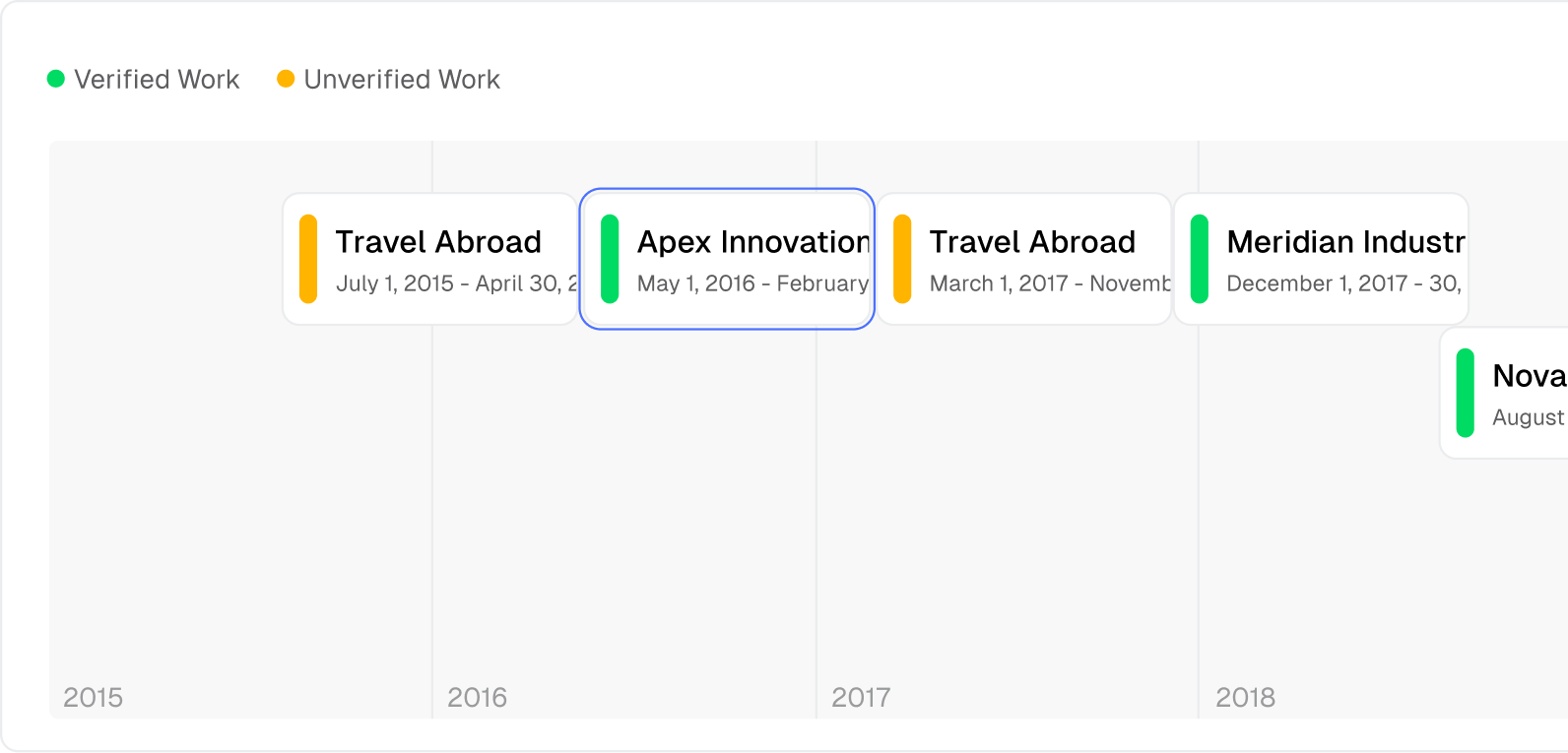
ID and CV check
Verification of identity, CV, and employment history, including documentation of employment gaps
Criminal records checks
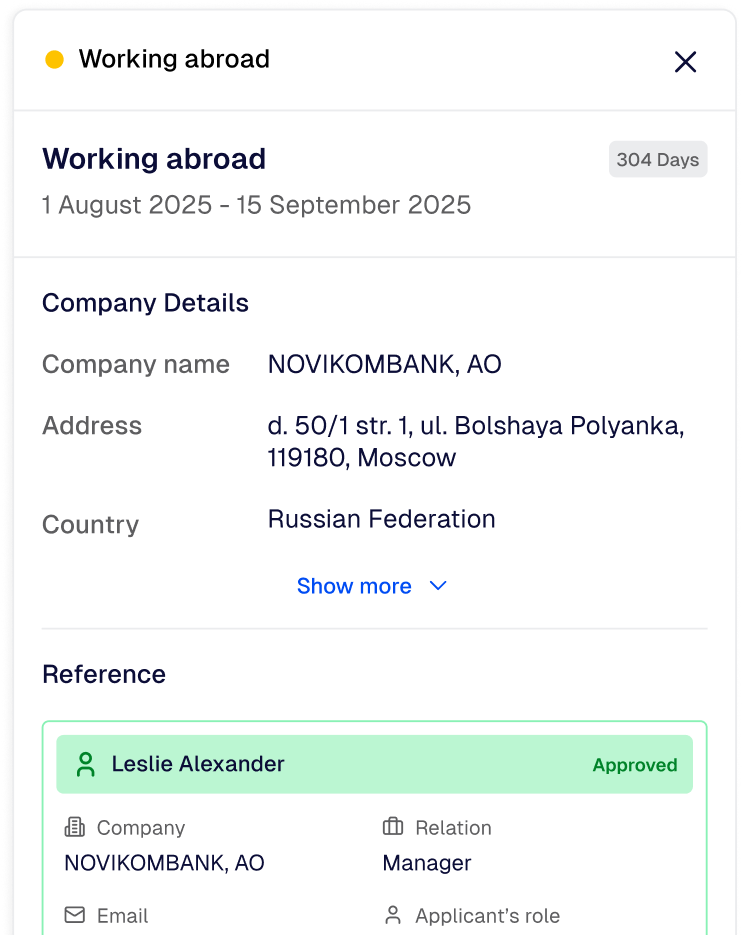
Automatic check of criminal record
Heading
References, conflicts of interest, and secondary employment
Ongoing re‑screening
Text
Regulatory requirements and P‑Secure recommendations
The financial sector is subject to extensive and detailed regulation focusing on financial integrity, digital resilience, and personnel security.
Anti‑Money Laundering Act
The Anti‑Money Laundering Act requires financial institutions to screen employees prior to employment and on an ongoing basis during employment, using a risk‑based approach.
In particular, criminal record information is relevant.
DORA (Digital Operational Resilience Act)
Although the DORA Regulation primarily focuses on IT and cyber resilience, it is based on a holistic risk perspective in which human, organisational, and supplier‑related risks are key components.
DORA therefore indirectly requires financial institutions to maintain control over:
- who has access to which systems and data
- how access rights are granted, modified, and revoked
- how human risks are identified, mitigated, and monitored over time
The DORA Regulation also implies that financial institutions must maintain the same high level of organisational security as critical entities.
This is further supported by applicable Danish regulation, including the Executive Order on the Management and Governance of Credit Institutions (Management Order).
Fit and Proper
Financial institutions are subject to requirements that board members and key function holders must meet fit and proper criteria pursuant to CRD, MiFID II, Solvency II, and Danish financial legislation.
P‑Secure recommends structured background checks that support both dimensions:
- Fitness (fit): education, experience, and documented CV history
- Propriety (proper): criminal records, references, and conflicts of interest
Based on the above, P‑Secure recommends conducting background checks using tailored screening types depending on a person’s role, access rights, and responsibilities. With P‑Secure, screenings can be performed in accordance with legal requirements, best practice, and specific organisational needs, including re‑screening.
The need for modern background screening
Implement automated and compliant background checks
Increasing regulatory requirements in the financial sector mean that background checks can no longer be handled effectively through manual processes. Lack of system support increases the risk of errors, inadequate documentation, and delayed processes.
Benefits of automated background checks include:
- Reduced administrative burden
- Shorter onboarding time
- Greater consistency and transparency
- Stronger audit readiness, internal control, and risk management
- Support for continuous compliance
- Coverage of employees, board members, suppliers, and other relevant parties
Continuous compliance
More than a background check
P‑Secure is not merely a tool for one‑off background checks, but a platform for ongoing compliance:
- Supports compliance with the Anti‑Money Laundering Act, DORA, and fit and proper requirements
- Centralises all documentation—ready for audit and supervisory review
- Enables risk‑based re‑screening and continuous monitoring
- Ensures GDPR compliance and traceability
For financial institutions, the challenge is to balance stringent regulatory requirements with efficient operations and a high level of trust. P‑Secure supports a more robust, transparent, and future‑proof compliance infrastructure.